
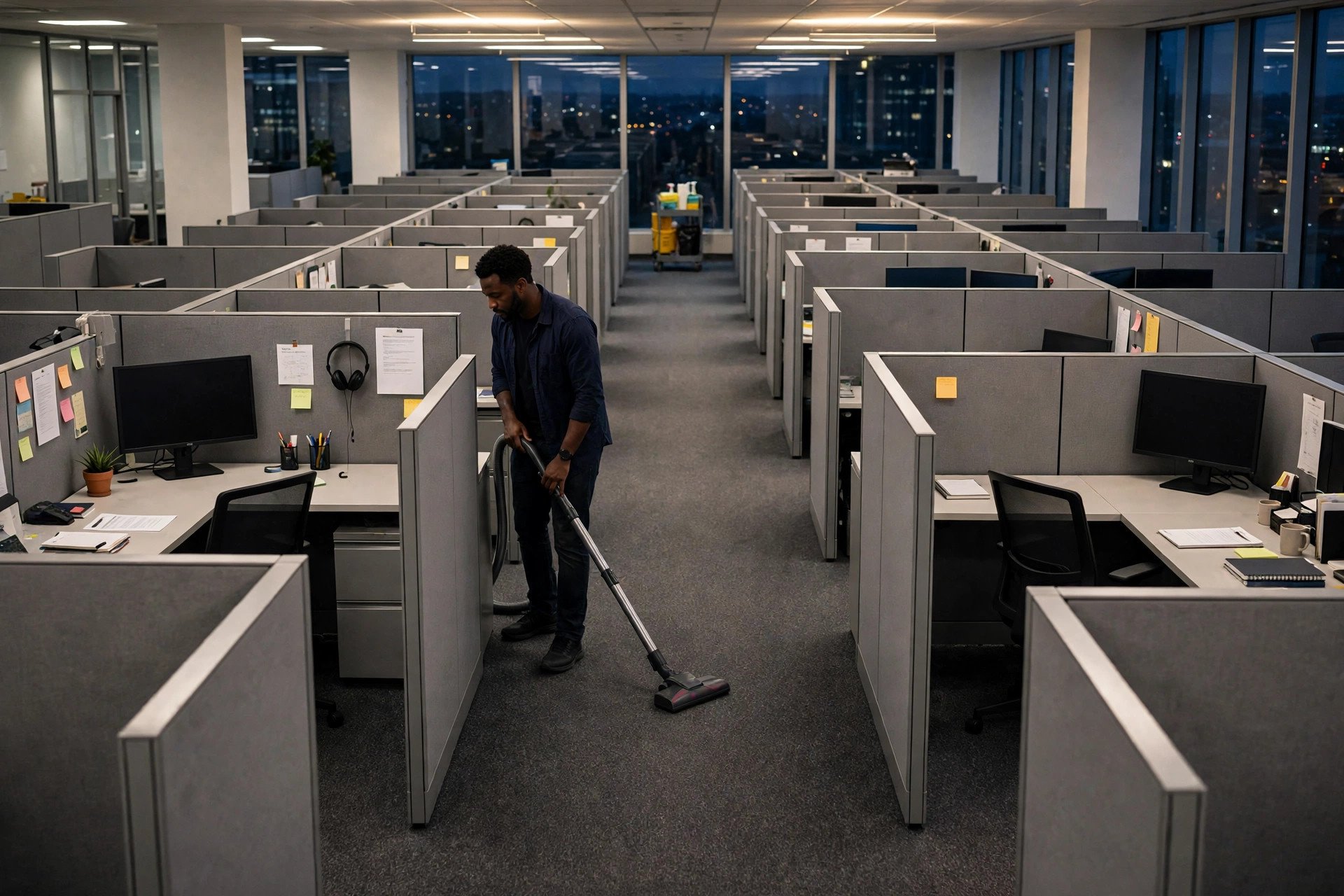
Almost nobody grows up planning to become an office cleaner, which is exactly why the work is always hiring. Offices, clinics, schools, and warehouses need cleaning every single day, in every town, in good economies and bad ones. If you want to get started as an office cleaner, the barrier is refreshingly low: no degree, no license, and usually no experience for an entry-level crew position. What employers actually screen for is simpler and harder to fake — Will this person show up, every shift, and treat a stranger’s workplace with care when nobody is watching?
Three ways an office cleaner gets hired
The first door is a commercial cleaning company. These firms hold contracts with buildings all over a metro area and hire crews constantly, because turnover in this trade is a fact of life. You apply, you pass a background check — offices hold computers, files, and sometimes medication or cash, so expect one — and you are assigned to a site and a shift. The second door is in-house work: a school district, hospital system, city government, or large company that employs its own custodial staff. These jobs are posted less often and attract more applicants, because they tend to come with steadier schedules and fuller benefits. The third door is your own small operation, cleaning a handful of offices for owners you know personally. That route pays best per hour eventually, but it starts with zero clients and all the risk on you. Most people begin at door one, learn the trade on someone else’s contract, and decide later which direction suits them.
What the shift actually looks like, hour by hour
Evening crews usually clock in as the office empties. The first pass is trash and recycling — every bin, every break room, every bathroom — because waste is what building tenants notice first. The second pass is surfaces: desks that are clear get wiped, glass gets spotted, kitchen counters and appliance handles get disinfected. Bathrooms come next, and they are the inspection point; a supervisor or a tenant can forgive a dusty vent, but a dirty restroom generates a phone call. Floors finish the night — vacuuming carpeted areas, mopping hard surfaces — and then the building gets locked, alarmed, and left darker than you found it. Experienced cleaners work a route in the same order every night, because routine is what turns a four-hour building into a three-hour building without cutting corners. That efficiency, not raw speed, is the skill the job is really teaching you.
The supplies closet is a chemistry lesson
New cleaners are often surprised by how much of the training is about chemicals. Every product in the closet has a job and a dilution, and mixing the wrong two can create fumes that hurt you — bleach and ammonia together are the classic dangerous pair, and they sit side by side in many closets. Good employers walk you through the safety data sheets and the label rules before your first solo shift. Gloves are not optional, and neither is ventilation when you are working with strong products in a small restroom. If a company hands you a spray bottle and a set of keys with no training at all, that tells you something about the company, and not something good. The labor-exchange resources at CareerOneStop can help you compare local employers and find workforce programs in your state if the first outfit you land with cuts corners on safety.
Where office cleaners look for the work
Cleaning companies advertise where everyone advertises now — the big job boards — but a remarkable share of hiring still happens through walk-ins and word of mouth. Stopping by a local company’s office with a simple resume, during business hours, dressed as if you respect the trade, genuinely works in this field; managers hire people they can picture handing keys to. Staffing agencies are another steady pipe, since cleaning firms use them to fill routes quickly. If your longer goal is a licensed trade rather than cleaning for good, that is a legitimate plan too — routes into the trades, like the ones in our guide to getting a job in welding, often start with exactly this kind of dependable shift work funding the training. Some cleaners instead build credentials from home, the way the readers of our explainer on getting certified for teaching online do, studying after their shift ends.
Moving up without leaving the building
The ladder in this trade is short but real. Crew members who are reliable become leads, leads become supervisors who train crews and inspect buildings, and supervisors become area managers who hold the client relationships. Each step trades some physical work for responsibility — and the pay follows the responsibility. There is also a sideways ladder: specializing. Floor-care technicians who strip, wax, and restore hard floors, and carpet specialists who run extraction equipment, are harder to replace than general cleaners and are paid accordingly. The broader picture of how hands-on trades build into careers is covered in our overview of careers in welding, and the pattern is the same here: master a machine or a process that others avoid, and you stop being interchangeable. Formal training routes exist too — Apprenticeship.gov lists registered programs, including building-services pathways in some states, that combine paid work with classroom hours.
The honest downsides, stated plainly
The hours are the trade’s biggest asterisk. Most office cleaning happens evenings and nights, which suits some lives beautifully and wrecks others. The work is physical — you will walk miles a week, lift bags, and bend constantly — and it is solitary, which some people experience as peaceful and others as lonely. Pay at the entry level is modest, and the cleaners who stay stuck at it are usually the ones who never moved toward lead roles, specialties, or better employers. Treat the first job as an apprenticeship in reliability, learn every machine in the closet, and be the person the supervisor calls first. In a trade built on trust, that reputation is the whole resume.