
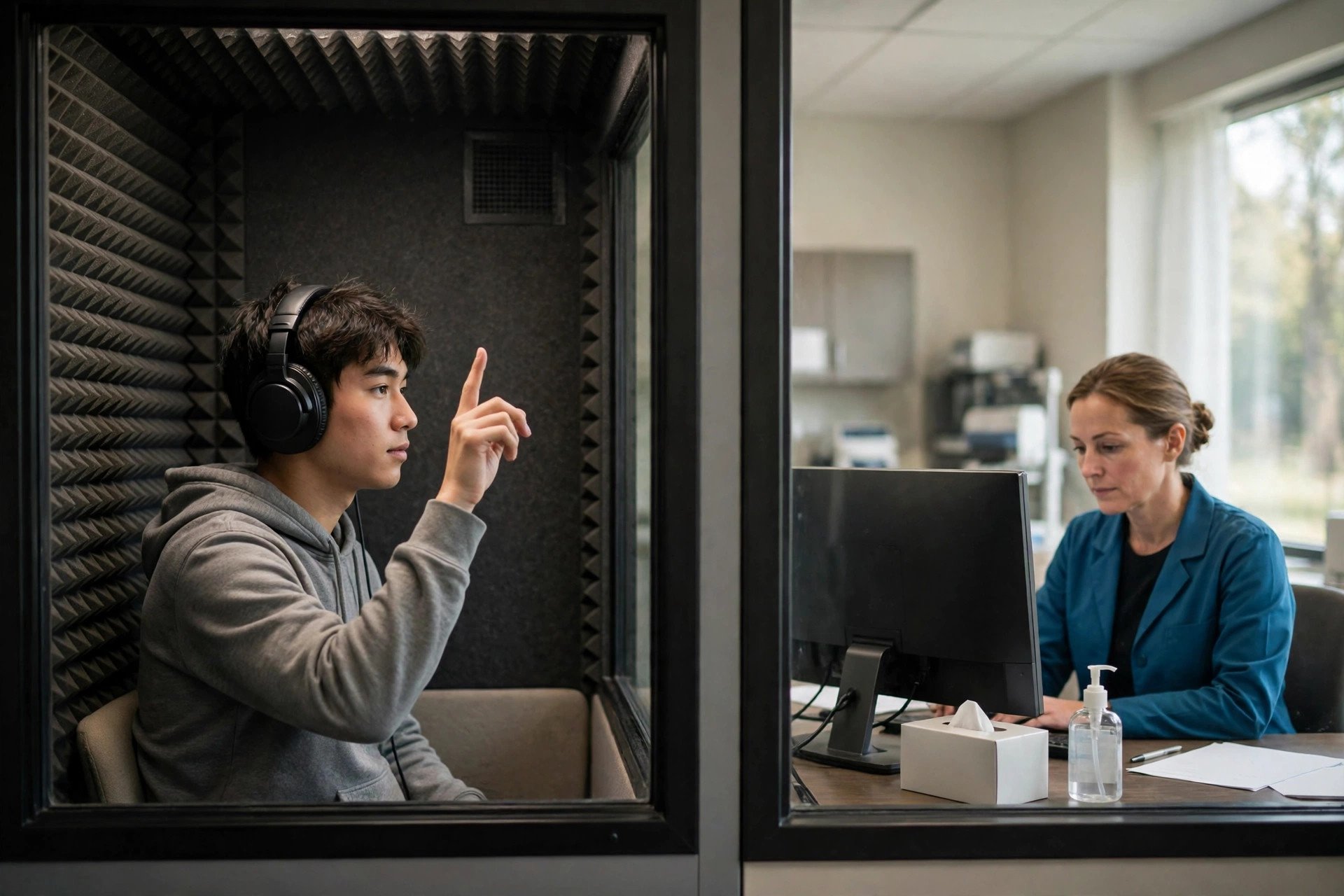
Every clinical trial needs something it can measure, and tinnitus refuses to cooperate. The ringing, buzzing, or hissing is real — ask anyone lying awake at 3 a.m. listening to it — but in most cases no instrument on earth can detect it, because the sound is generated inside the listener’s own auditory system. Understanding tinnitus clinical trials means starting with that puzzle: how researchers design fair tests for a symptom only the patient can report, and what kinds of treatments are worth testing at all. The National Institute on Deafness and Other Communication Disorders describes tinnitus not as a disease but as a symptom with many possible roots, from noise damage to blood-flow problems — which is why the research splits into lanes.
Lane one: treat the ear and the signal
The most intuitive research aims at the auditory system itself. Hearing aids are studied not just for hearing loss but for their effect on tinnitus, since amplifying the outside world can make the internal sound less prominent; sound-therapy devices and masking generators follow the same logic. A newer family of studies pairs sound with mild electrical stimulation — of the tongue, the neck, or the ear — on the theory that two signals together can retrain how the brain processes the phantom one. These device trials are typically the ones recruiting people whose tinnitus is stable and well-characterized, because researchers need a steady baseline before they can claim anything changed.
Lane two: treat the reaction, not the sound
A second lane accepts the sound and targets the suffering. Clinicians have long observed that distress tracks attention and anxiety more than loudness: two people with identical ringing can live completely different lives. So trials test structured counseling approaches, cognitive behavioral therapy adapted for tinnitus, mindfulness programs, and sleep interventions, measuring whether life gets bigger around the sound even when the sound itself stays put. MedlinePlus’s tinnitus summary reflects this reality in its treatment overview — management strategies feature as prominently as devices, because for many patients management is what currently works. None of this is consolation-prize science: for many participants, learning to sleep and concentrate again is the outcome they actually wanted when they walked in. If that framing sounds familiar from other symptom research, it is: our look at insomnia clinical trials covers the same therapy-first pattern for sleep.
Lane three: the long search for a pill
Visitors always ask about drugs, and the honest summary is short: there is still no medication approved specifically for tinnitus, anywhere. That has not stopped the research — it explains its variety. Trials have tested medicines borrowed from epilepsy, circulation, and psychiatry, usually aimed at quieting the overactive neural signaling researchers believe generates the phantom sound. Most candidates have disappointed, which is itself useful knowledge: it tells scientists the sound is not one switch to flip. Current pharmaceutical work tends to be narrower — targeting specific tinnitus subtypes, protecting hearing after noise injury before tinnitus sets in, or pairing a drug with sound therapy rather than asking a pill to do everything alone. If a supplement or clinic promises pharmacological silence today, it is selling ahead of the evidence by years.
How do you measure a phantom? Carefully, and on paper
Since the sound itself usually cannot be recorded, trials measure its footprint. Participants rate loudness and pitch by matching their tinnitus to tones the researcher plays. They complete validated questionnaires — the Tinnitus Handicap Inventory is the classic — that score how much the condition interferes with sleep, concentration, mood, and daily life. Sleep quality, hearing tests, and mood scales ride along. A treatment “works” in this world when those scores move meaningfully against a control group, which is why legitimate studies are so insistent on baseline visits and follow-ups: without a careful before-picture, the after-picture proves nothing. It also explains the field’s honesty problem in reverse — any clinic claiming it can silence tinnitus outright, today, for a fee, is claiming something no completed trial has established.
Finding and joining tinnitus clinical trials
Recruiting studies are listed on ClinicalTrials.gov, the U.S. National Library of Medicine’s registry; searching “tinnitus” and filtering by location shows what is enrolling near you, what each study tests, and who qualifies. Expect screening to include a hearing evaluation and questions about how long the tinnitus has lasted, whether it pulses with your heartbeat (a different, sometimes treatable category), and what medications you take, since some drugs affect the ears. Exclusions are not rejections of you personally: studies need a clean signal, so recent changes in medication, another trial within a certain window, or a hearing condition that would confound the measurements can all park an application. Being screened out of one study often makes you a documented, pre-qualified candidate for the next one — ask the coordinator to keep your file rather than treating the no as an ending. Our companion overview of exploring tinnitus clinical trials follows the participant journey in more detail, and the mechanics of screening and phases will feel familiar to anyone who has read about asthma clinical trials. Go in with the right expectation: you are helping researchers learn whether something works, and the honest answer may be that it doesn’t — but for a condition still waiting on its first approved drug, that learning is the treatment pipeline itself.